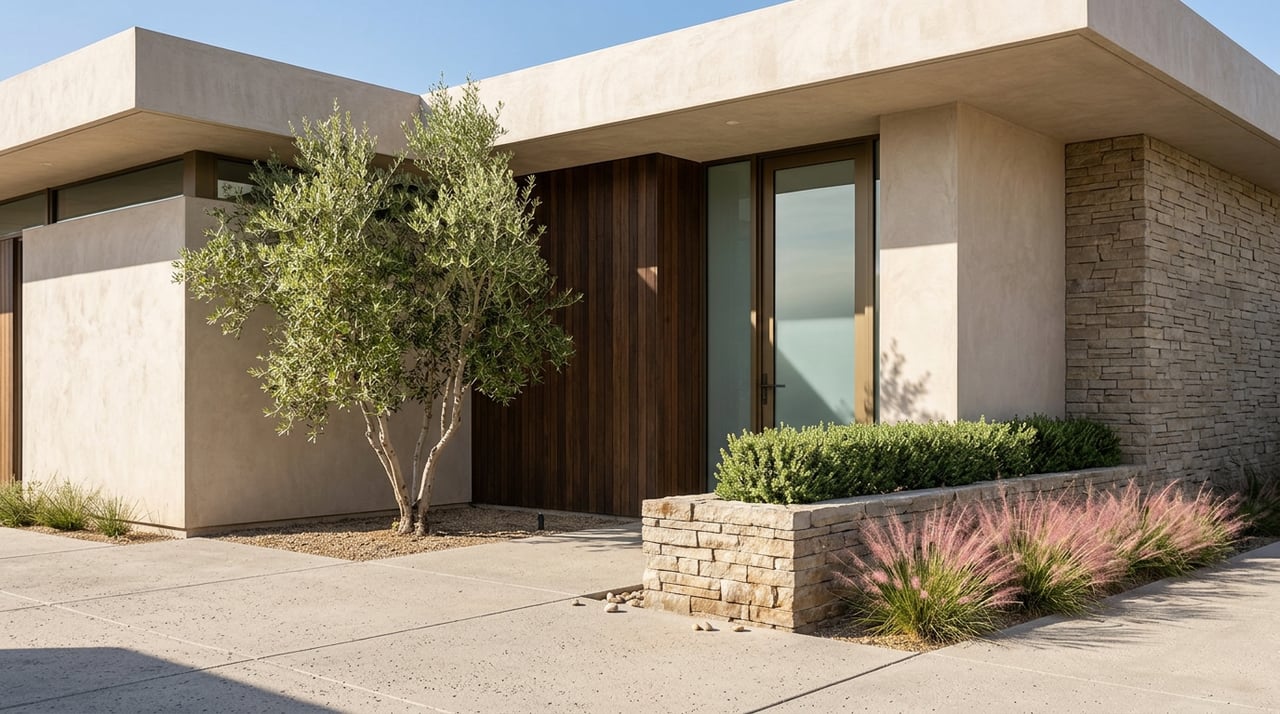
Walk down a Santa Monica side street south of Wilshire and you'll pass small multifamily buildings that look almost interchangeable. Stucco duplexes and triplexes from the 1960s and 70s, a shared driveway, maybe a courtyard with a lemon tree. An investor scanning listings sees two of these buildings three blocks apart, same era, same unit count, same square footage on paper. One is priced to reflect a straightforward rental. The other carries a number that seems to assume the building is already fully leased at market rate, tenants and all, no friction.
The difference usually isn't the address. It's a date stamped on the certificate of occupancy.
The date that outweighs the zip code
Santa Monica's rent control ordinance, adopted by voters in 1979, covers residential rental units in buildings that received a certificate of occupancy before April 10, 1979. If a building cleared that date, it's covered. If it didn't, and it's a single family home or a condominium, it's exempt regardless of age under the state's Costa-Hawkins Rental Housing Act. A building constructed after April 10, 1979 is exempt from the local ordinance no matter what it is.
That single date determines whether an investor is buying a building with decades of accumulated rent history, or one that resets to market rate every time a unit turns over. For a duplex or triplex, this is the underwriting question that matters more than square footage, more than the block, more than the finishes.
Here's the exemption list in plain terms, because it comes up in nearly every small multifamily conversation in this city:
- Buildings with a certificate of occupancy on or after April 10, 1979
- Single family homes and condominiums, regardless of age, under Costa-Hawkins
- Owner-occupied duplexes and triplexes where the Rent Control Board has granted an exemption
- Government subsidized housing with rents set by regulatory agreement
- Units in hospitals, convents, monasteries, and extended care facilities
Everything else built before that April date, and rented as a residential unit since, is presumed covered until proven otherwise.
What being covered actually costs an owner
For the 2026/2027 period, the Santa Monica Rent Control Board set the annual General Adjustment at 2.6%, capped at $70 a month for units with a Maximum Allowable Rent of $2,674 or higher, effective September 1, 2026. Owners can also pass through half of the $240 annual per-unit registration fee, or $10 a month, with proper notice.
None of that sounds dramatic on its own. A 2.6% ceiling on rent growth for one tenant in one unit is a rounding error. But stack it across a five-unit building with tenants who've been in place for a decade, and the math changes. Rent that never resets to market compounds into a real gap between what the building collects and what it could collect, and that gap shows up directly in a cap rate calculation. A rent controlled building with long-tenured tenants can carry a lower net operating income than an identical building down the street with turnover, which means it can appraise lower using standard income approach math, even though the physical asset is the same.
The vacant listing is telling you something
Watch how these buildings get marketed and the pattern becomes obvious. A recent listing for a fully vacant, detached triplex on a quiet Santa Monica cul-de-sac, walkable to the beach, Urth Caffe, Abbot Kinney, and Main Street, pitched its vacancy as the headline feature. The listing described the opportunity explicitly: immediate repositioning at market rents, a rare situation given the city's rent control restrictions.
That phrasing only makes sense in a market where most comparable buildings aren't vacant, and where the ability to set rent from scratch is itself the product being sold. An empty rent-controlled-eligible building isn't a liability to price around. It's the exception buyers are specifically hunting for, because it sidesteps the entire question of legacy tenancies and existing Maximum Allowable Rents.
What it costs to get to that vacancy
If a covered building isn't already empty, and an owner wants it that way, Santa Monica requires a formal process under the Ellis Act, and it isn't cheap. As of early 2026, base relocation payments to displaced tenants run roughly $23,000 to $24,000 per unit, with additional payments required for elderly, disabled, and family households. For a ten unit building with a mix of tenant types, total relocation costs can easily clear $250,000 before an owner touches a permit or a paint can.
Tenants are also entitled to at least 120 days notice, longer for elderly or disabled residents, and they keep paying rent and retaining full rights through that entire window. There's no shortcut version of this process. An investor underwriting a covered building with the intention of repositioning it needs to build that number into the purchase price, not treat it as a rounding error discovered in escrow.
This is the part that catches buyers who are new to Santa Monica off guard. They've done multifamily deals in cities with lighter rent control, budgeted a modest buyout here and there, and then run into a Santa Monica relocation schedule that turns their renovation timeline and their capital stack into two very different numbers.
Reading the building, not just the listing
None of this means covered buildings are bad investments. Properties with long-term tenants paying below market rent do show lower current income, but that same gap is exactly what attracts value-add buyers willing to wait for natural turnover. The math simply requires knowing which building you're actually buying.
In practice, this plays out differently depending on where in Santa Monica you're looking. Buildings in more established, family-oriented pockets tend to hold tenants longer, which means steadier income but less near-term upside from turnover. Buildings in the walkable, younger-skewing corridors closer to Main Street tend to turn over faster, which is part of why per-square-foot pricing there can run lower even in a similarly desirable location. Neither pattern is better. They're different bets, and the certificate of occupancy date tells you which one you're placing before you ever look at a rent roll.
Before making an offer on a Santa Monica duplex, triplex, or fourplex, the useful diligence list looks like this: pull the certificate of occupancy date, request the Maximum Allowable Rent letters for every unit from the Rent Control Board, ask for the full rent roll and twelve months of income and expense history, and confirm whether registration fees and any past petitions are current. If the plan involves repositioning the building at any point, price the Ellis Act relocation math into the offer now, not after closing.
A few questions worth asking directly
Does a building's age alone tell me if it's rent controlled? No. Age is a strong signal but the actual trigger is the certificate of occupancy date, specifically whether it was issued before April 10, 1979. Two buildings built the same decade can land on opposite sides of that line depending on when occupancy was certified.
Are single family homes and condos ever covered by Santa Monica rent control? No. Under the state Costa-Hawkins Act, single family homes and condominiums are exempt from local rent control regardless of age. This is a separate exemption from the 1979 construction cutoff.
If I buy an occupied rent-controlled building, am I stuck with current rents forever? Not necessarily, but any path to market rent runs through either natural tenant turnover or a formal Ellis Act withdrawal with required relocation payments and notice periods. There isn't a faster route around either one.
Where do I verify a specific building's status before making an offer? The Santa Monica Rent Control Board maintains the registry of controlled units and can confirm a property's Maximum Allowable Rent history directly.
Santa Monica's small multifamily market rewards buyers who read the paperwork as carefully as the floor plan. If you're evaluating a duplex, triplex, or small apartment building here and want a second set of eyes on what a specific certificate of occupancy date actually means for your numbers, Dana Benyehuda can walk through the diligence with you before you're locked into an offer.